
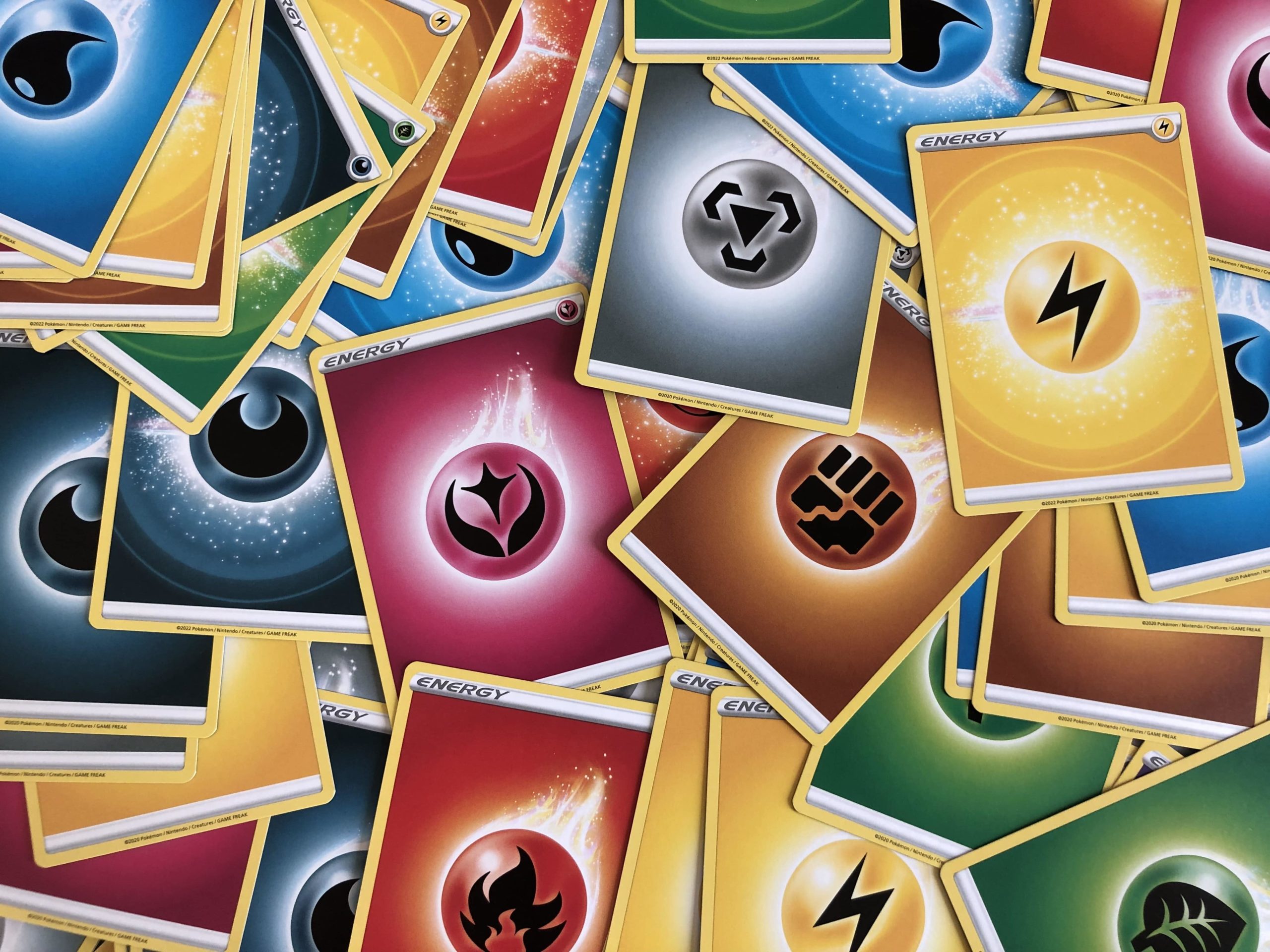
Almost every energy card you own is worth about four cents. A small handful are worth four figures. Here's how to tell which pile yours belongs in, and why the date printed on your old ones is fooling you.
- Basic energy from any modern set is bulk. Sellers move them at roughly four to seven cents a card, and that's the asking price.
- Holo, secret rare, and promo energy cards are the exception. Raw ones run $35 to $100.
- In PSA 10 those same cards jump hard. A 1st Edition Team Rocket Rainbow Energy sits around $1,724.
- If your card says 1995, it isn't from 1995. English Pokémon cards didn't exist until January 1999.
Are Pokémon energy cards worth anything?
Mostly no. I'd guess 99% of the energy cards sitting in shoeboxes right now are worth less than a dime each, and that includes the old ones people are convinced are treasure.
But that 1% is real. A few energy cards pull four figures graded, and they're not the ones you'd expect. So it's worth twenty minutes of sorting before you dump the pile.
What basic energy actually sells for
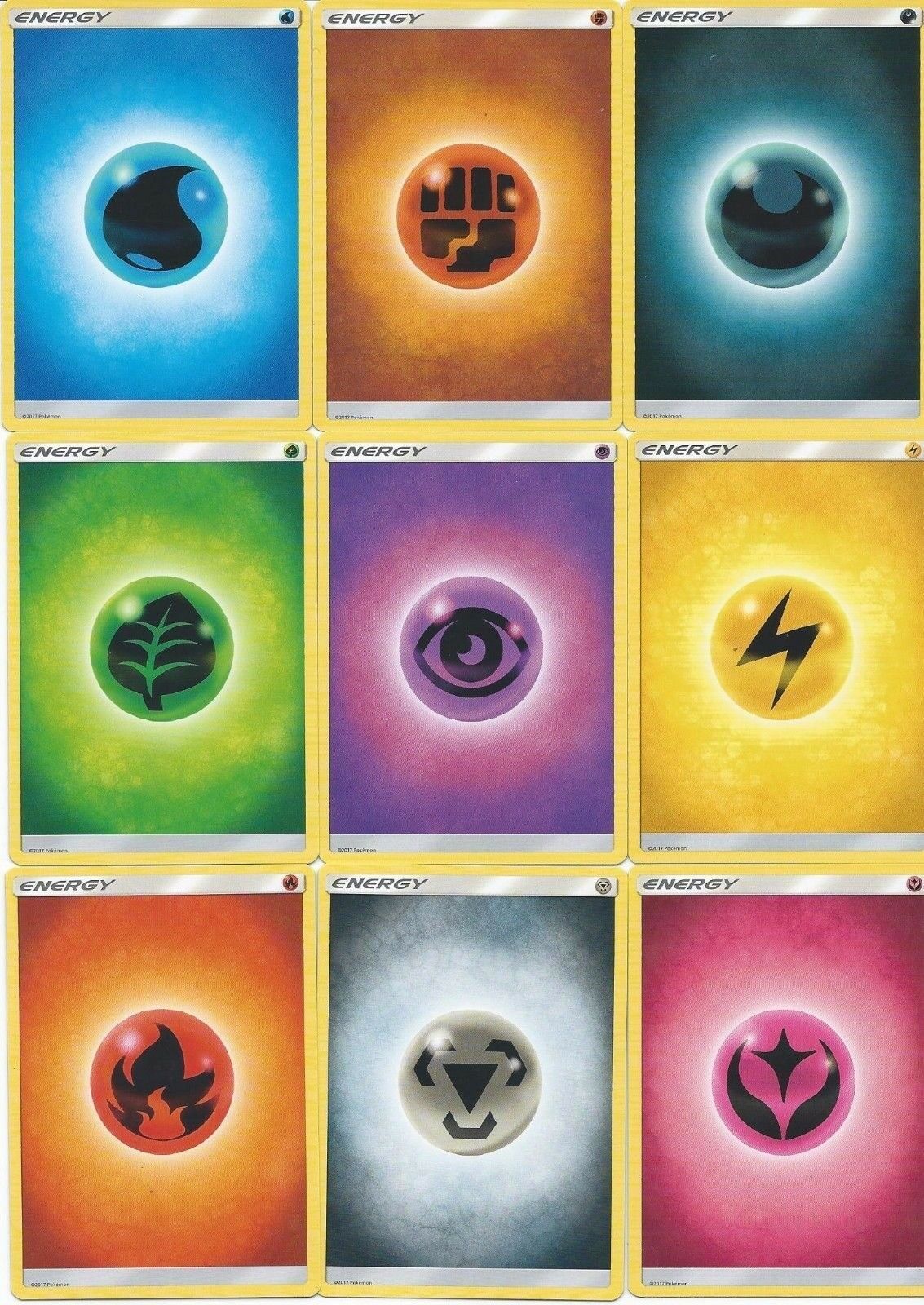
Bulk. That's the whole answer for standard basic energy, and it doesn't matter much which type it is.
Sellers list curated lots of 160 basic energy, twenty of each type, somewhere between $6.99 and $11.97. Do the division and you're at four to seven cents a card. And remember that's what somebody is asking. What a shop pays you for bulk is a fraction of that, if they take it at all. Most won't, because everybody has these.
Before you ask: a Fire energy isn't worth more than a Water energy. Type doesn't drive price on basic energy. Finish does, and so does the set it came from. A plain basic from a 2023 set is a plain basic.
The rules people get wrong
Two things worth clearing up since a lot of guides state these backwards.
- Basic energy has no deck limit. You can run as many copies as you want, which is exactly why they were printed by the truckload and why they're worthless.
- Special energy is capped at four per name. Not four special energy total, four of each same-named card. Big difference if you're deckbuilding.
There have been nine Basic Energy types across the game's history: Grass, Fire, Water, Lightning, Psychic, Fighting, Darkness, Metal, and Fairy. Fairy is the odd one out. It rotated out of Standard in 2021 and is the only Basic Energy ever pulled from play, with the Celebrations Elite Trainer Box being the last product to carry it. So eight are live and nine exist. There's no Colorless basic energy either, because colorless costs get paid with anything.
Why your energy card says 1995
This one comes up constantly and it's the reason a lot of people think they're sitting on something.
Look at the bottom of an old energy card and you'll see something like ©1995, 96, 98 Nintendo, Creatures, GAMEFREAK. People see 1995, do the math, and figure they've got one of the first Pokémon cards ever printed.
They don't. That line is the franchise copyright for Nintendo, Creatures, and GAME FREAK, and it has nothing to do with when your specific card came off the press. English Pokémon cards launched in January 1999. There is no such thing as a 1995 English Pokémon card. The Japanese game started in October 1996, so there's no 1995 Japanese card either.
The copyright line tells you who owns Pokémon. The set symbol tells you when your card was printed.
Same deal with people searching 1999 energy values. A 1999 date just means Wizards of the Coast era, which covers a lot of ground and most of it is common. If you want to date a card properly, use the set symbol and the card number, then look that exact printing up.
The energy cards that are actually worth money
Here's where it gets interesting, because the ranking flips depending on whether the card is graded.
| Card | Raw | PSA 10 |
|---|---|---|
| Rainbow Energy 1st Ed, Team Rocket 2000 | ~$37 | ~$1,724 |
| Potion Energy reverse holo, Legendary Collection 2002 | ~$60 | ~$669 |
| Psychic Energy (Espeon), Call of Legends 2011 | ~$59 | ~$489 |
| Water Energy (Lugia), Call of Legends 2011 | ~$48 | ~$468 |
| Darkness Energy (Umbreon), Call of Legends 2011 | ~$98 | ~$401 |
Look at that top row again. The Rainbow Energy is the cheapest raw card on the list at about $37, and it's the most expensive by a mile in PSA 10 at roughly $1,724. That's a 46x multiple on a grade.
Meanwhile the Call of Legends Darkness Energy is the priciest raw card here at around $98, and its PSA 10 is the lowest of the five. More people got that one graded, so gem mint copies aren't scarce in the same way.
The Rainbow Energy was the first holographic energy card ever printed, it came out in 2000, and holo cards from that era scratch if you look at them wrong. That's the whole story behind the number.
A few others worth knowing
The Burning Shadows secret rare Fairy Energy runs around $50 raw and carries a story, since it was the last Fairy Energy printed before the type got retired. Staff-stamped and championship promo energy cards also climb into the low hundreds, because attendance numbers cap the supply permanently.
What makes an energy card valuable
Four things, and a card basically needs at least one of them or it's bulk.
- A holo or secret rare finish. Plain basic energy is printed forever. Holo and gold secret rare energies show up at fixed pull rates and stop when the set stops.
- Artwork with a Pokémon on it. Every valuable one on my table has a Pokémon in the art. Call of Legends put Umbreon, Espeon, and Lugia silhouettes in the holo pattern and that's the entire reason those cards cost $50 instead of five cents.
- Limited distribution. Staff promos, championship handouts, corporate decks. If the only way to get one was to be in a specific room on a specific day, supply is fixed forever.
- Grade. The single biggest multiplier on this page. $37 to $1,724 is the same card in different plastic.
Worth flagging: a raw vintage holo energy at $37 that grades PSA 10 is a genuinely good bet if the card is clean. It's also a coin flip, because 2000-era holos rarely come back gem mint. Read the surface under a light before you pay grading fees. My guide on how to grade Pokémon cards walks through what graders actually look at.
How to check what yours is worth
Takes about five minutes per card once you know the steps.
- Find the set symbol and card number. Bottom of the card. That's what identifies the printing, not the copyright year.
- Check if it's holo or textured. Tilt it under a lamp. If the whole card shines or there's a Pokémon shape in the foil, keep going. If it's flat, it's bulk.
- Search sold listings, not asking prices. Asking prices on energy cards are pure fiction. I check completed sales on eBay and TCGPlayer before I price anything, and I sell on both every week through my eBay store and TCGPlayer.
- Only think about grading above about $30 raw. Below that the fees eat the upside.
If your whole pile turns out to be plain basics, sell them as one bulk lot or hand them to somebody starting a deck. Sorting a thousand basics to make forty bucks is a bad trade on your time. Same math as code cards, which I broke down separately.
Frequently asked questions
Are Pokémon energy cards worth anything?
Standard basic energy is worth about four to seven cents each in bulk lots. Holo, secret rare, and promo energy cards are the exception, running $35 to $100 raw and reaching several hundred to over $1,700 in PSA 10.
What is the most expensive Pokémon energy card?
The 1st Edition Rainbow Energy from Team Rocket, the first holographic energy card ever printed. It sells for roughly $37 raw but around $1,724 in PSA 10, because gem mint copies of a 2000-era holo are very hard to find.
How much is a 1995 Pokémon energy card worth?
There is no 1995 Pokémon card. The copyright line reading 1995, 96, 98 is the franchise copyright for Nintendo, Creatures, and GAME FREAK, not the print date. English Pokémon cards launched in January 1999 and the Japanese game started in October 1996.
How much is a basic energy card worth?
A few cents. Bulk lots of 160 basic energy sell for roughly $7 to $12, which works out to four to seven cents per card, and a shop buying them from you would pay less than that.
Are rare energy cards a thing?
Yes. Holo energy, gold secret rare energy, and promo energy from staff or championship distribution are all properly scarce. The Call of Legends holo energies featuring Umbreon, Espeon, and Lugia are the best known examples.
How many Pokémon energy types are there?
Nine Basic Energy types have existed: Grass, Fire, Water, Lightning, Psychic, Fighting, Darkness, Metal, and Fairy. Fairy rotated out of Standard in 2021 and is the only Basic Energy ever removed from play, so eight are currently in use.
How many energy cards can you have in a deck?
Basic Energy has no limit, so you can run as many copies as you like. Special Energy follows the normal rule of four copies per card name, which is four of each named Special Energy rather than four total.